YF
1 nurse passed this note on
Q&A
Accurate nursing documentation is essential for patient safety and legal protection, yet time constraints often force nurses to choose between charting and direct patient care. This article provides practical strategies from experienced nursing professionals on how to maintain thorough records while staying present at the bedside. Learn which documentation elements require immediate attention and how to efficiently capture critical details without compromising patient interaction.
1 nurse passed this note on
When charting piles up and bedside needs won't stop, I use one filter we live by at Davila's Clinic: if missing this note could change what we do for the patient in the next few minutes, it goes in now. Everything else earns a honest batch slot once the urgent moment passes.
My go-to is a thirty-second safety stamp before I dive back into the room. Time, who was present, the one red flag or decision that has to survive if I get pulled away for twenty minutes. Not pretty narrative. Just the facts another teammate could act on without hunting me down. Full HPI polish, education bullets, and the rest wait until the patient is stable and I've got a breath. That's how we keep documentation accurate without ghosting someone at the worst second.
I won't hide behind the screen while a family is spiraling or symptoms are escalating. Our patient-first approach means the chart serves care, not the other way around. Batching works only after those non-negotiables are locked. We batch templated wellness and follow-up sections all day, but we never batch abnormal vitals, new complaints, or anything tied to chronic disease management that could snowball.
With extended evening hours and Saturday mornings in Weslaco, the rush is real. Prioritizing like this is how we've kept visits moving for working families in the Valley without rewriting stories from memory at nine PM. Accurate charting starts with being there when it counts; the detail fills in right after, in one focused pass, while it's still fresh.
Bedside tablets with structured templates let nurses capture care without stepping away. Templates use guided steps and smart defaults to cut typing. Tap-friendly screens and large buttons speed common entries and reduce slips.
A patient-facing mode can confirm allergies and pain scores right at the bed. Rugged cases and wipeable covers protect devices and support infection control. Launch a small pilot on one unit and gather feedback this month.
Secure voice recognition allows hands-free charting while care continues. Noise filtering and clear wake words help the system catch commands in busy rooms. A medical speech engine better understands drug names and clinical terms for safer notes.
Read-back prompts let staff confirm entries before saving to the record. Headset microphones and strong privacy settings protect patient dignity and data. Build a short command set and run a week-long trial to refine it.
Team-based scribe support frees bedside clinicians to focus on care while documentation happens in real time. A trained scribe can capture assessments and orders through secure access as they are stated. Clear rules define what scribes enter and what must be signed by a licensed nurse.
Privacy safeguards and consent notices protect patients during live documentation. Staffing plans ensure coverage across peaks without raising costs unpredictably. Pilot a scribe model on one high-need area and measure accuracy and time saved.
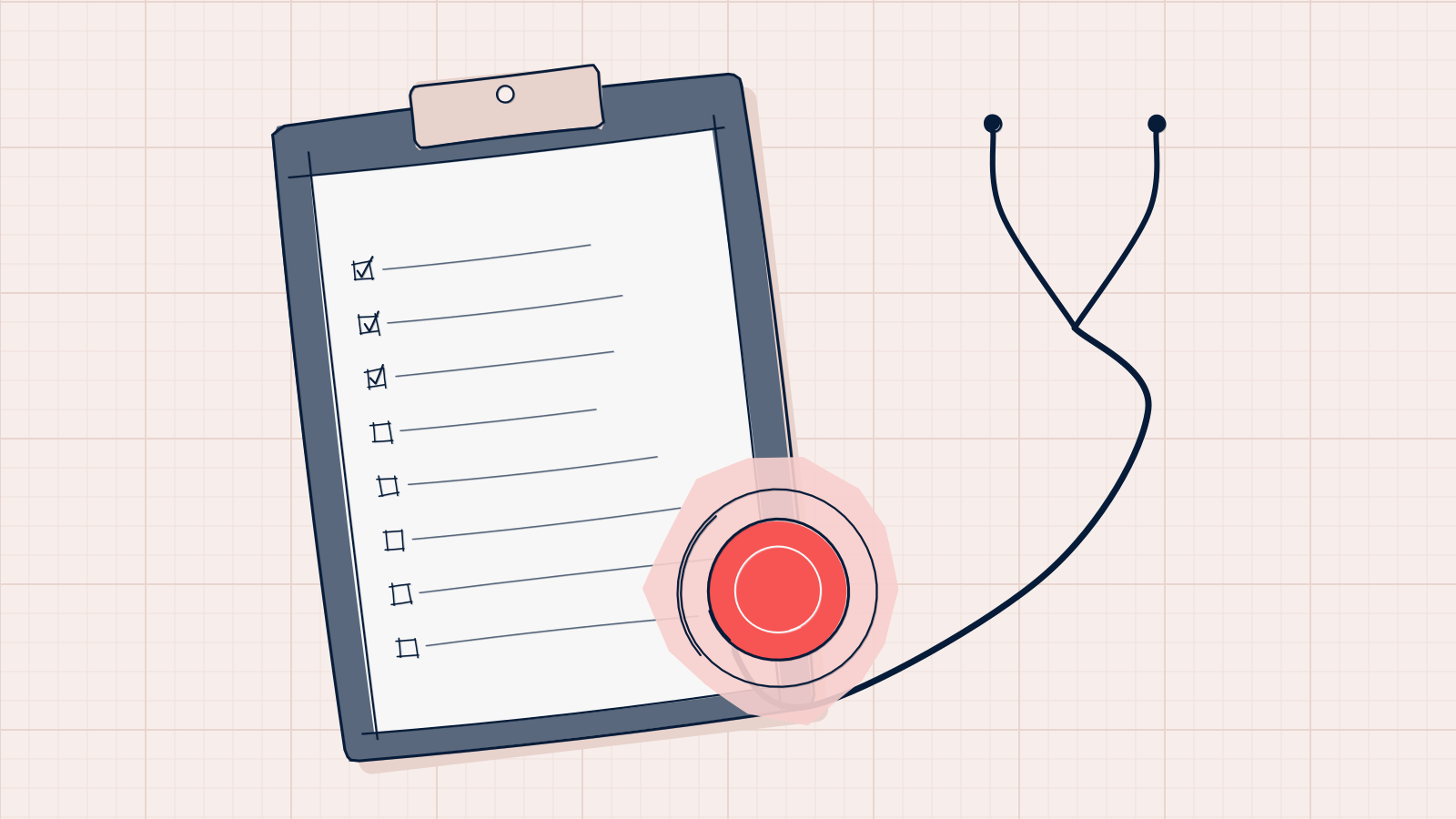
Standardized checklists keep notes complete even when the unit is hectic. Embedding the checklist inside the chart guides entries in the right order. A simple mnemonic, taught in huddles and drills, helps memory during urgent care.
Short field hints clarify what belongs in each box to avoid vague phrases. Periodic peer reviews can catch gaps and update the tool as needs change. Start by co-designing one checklist with frontline staff and test it on a single shift.
Barcode scanning for meds and connected vital signs monitors can auto-fill key fields in the chart. This reduces copy errors and keeps time stamps precise. Mapping each device field to the record prevents data from landing in the wrong spot.
At the bedside, scan prompts can trigger double-checks for allergies and dosing limits. A clear fallback path covers dead batteries or unreadable labels without breaking workflow. Set up a dashboard to track scan success rates and act on gaps.
Handover
More from the Nurse Magazine desk while this one is fresh.